On Attribution and Acknowledgment of AI Services
My Use of AI Tools
I’ve made no secret of my use of AI tools—here on my website, in personal matters (for example, repairing home appliances), and in my consulting work. I pay for a ChatGPT Plus subscription, and I frequently use AI-based tools such as GovTribe to support client business development.
Writing and Editing Support
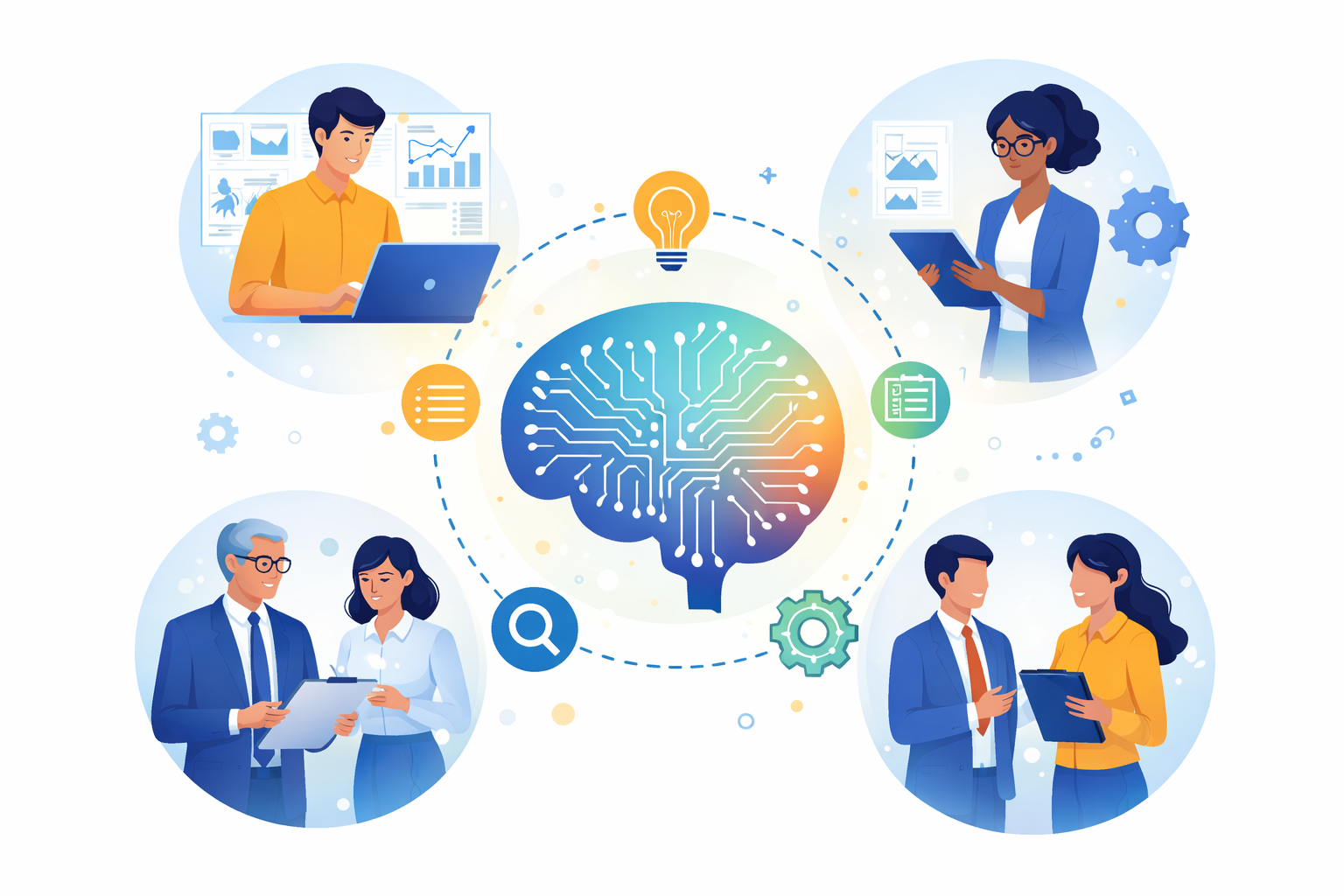
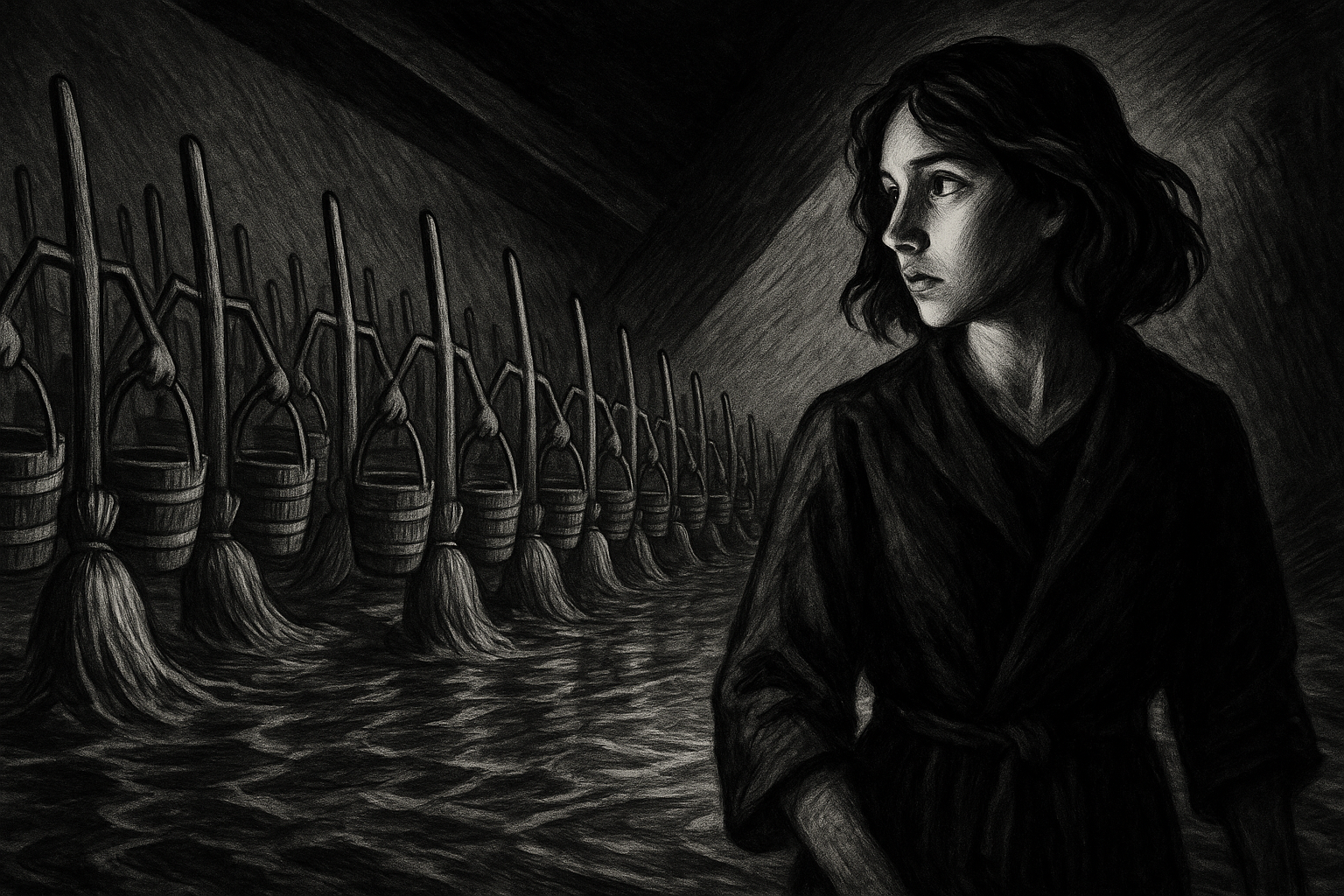
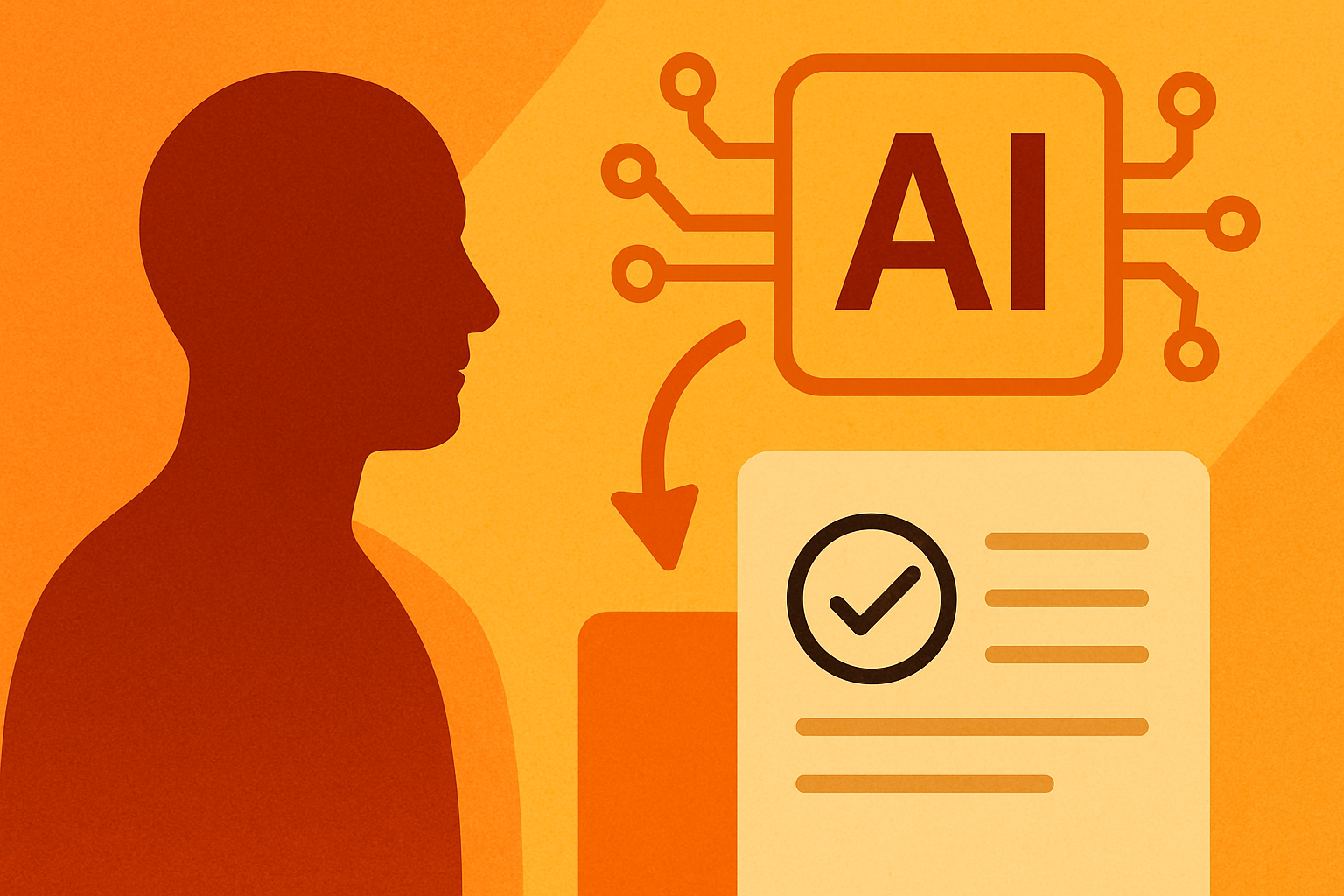
The closest I’ve come to using AI’s “creative” abilities is in the development of some of the graphics that accompany the Managing Technology section of this website, such as the graphic displayed at the top of this article. I do often use ChatGPT Plus to edit the text of the articles here—for clarity, grammar, and spelling—after I’ve written out the text of an article in longhand and used speech-to-text software on my iPhone to create an editable file. I did that with this article and it did make some of my awkward sentence structures more straightforward.
I have “trained” ChatGPT not to be too creative in its edits. In the early days, the edited text sometimes didn’t sound like something I would have written. That has changed. I do have a habit of writing overly long sentences and of writing in cursive with a fountain pen, and ChatGPT’s editing has helped me rein that in.
Disclosure?
But the question remains: even if I mention when I use ChatGPT to create a graphic header image, should I also mention when I use ChatGPT—or any other AI tool—to edit text for clarity, grammar, and spelling? Should that usage be disclosed in the accompanying text?
My View
I don’t think so even though I’ve done that here. I’m not copying the likeness of a dead celebrity, nor am I trying to make my writing sound like Hemingway, Steinbeck, or Arendt. Still, efforts are underway around the world to require content providers to disclose their use of AI and to manage intellectual-property controls. This probably won’t apply to a self-published website like www.ddmcd.com, but who knows what the future holds?
Practical Use
I don’t have the same concerns when using a tool like ChatGPT to repair home appliances or domestic electronics. There I can get detailed instructions on problem diagnosis and remediation, often adapted to my specific situation. I do wonder, though, where such information comes from—especially step-by-step instructions that address the quirks of obsolete models and makes.
In those cases, the proof is in the pudding: did the step-by-step instructions for installing Ubuntu Linux on a vintage 2009 iMac work or not? If there were “hallucinations” along the way, the end result was still successful and I’m back to having a fully functioning PC in the basement.
Low Stakes and the Limits of Law
Presumably, most of these instructions are gleaned from publicly available information. I do understand how using proprietary information without attribution can be problematic, and I’ve long considered the copyright notice at the bottom of my articles to be mostly pro forma—insufficient to ward off intellectual-property predators.
I learned long ago that the fuzzy nature of “fair use” would never be sufficient in the face of today’s broad and fluid access to information, but I figure that with a website like this, which I’ve been publishing on since 2002, usage is impossible to control once I hit the “publish” button.
Perhaps I would feel differently were I treating this website as something other than a hobby and self-promotion effort based on my enjoyment of writing. For all I know, somewhere an AI program is skimming my book reviews for information about historical novels set in ancient Rome. That’s fine with me—as long as it mentions my name!
But I doubt that will happen, even in countries with legislation requiring AI programs to acknowledge individual sources, regardless of the source;s published copyright or reuse notices.
Public Data
The issue of attribution becomes different when AI is used to interact with an explicitly public body of knowledge. In my business-development consulting, for example, I use tools like GovTribe and ChatGPT to research IT-related opportunities across federal, state, county, and local government. GovTribe, for example, provides a sophisticated chat-based approach to researching and managing government business opportunities—most of which are, by definition, in the public domain. I’ve also found that ChatGPT’s search and reasoning capabilities significantly enhance the market research one person can do.
Transparency and Responsibility
Both services are explicit about the steps they follow and the sources they use. As someone who spent many years in contract research, both services go a long way toward easing my concerns about what sources are being used to answer specific questions. I still have to evaluate the value of the information they provide, of course, and that’s where my own project management and consulting expereince comes in handy.
Human Analogy
Which brings us back to acknowledging the role of AI in one’s professional or creative endeavors. How different is it, for example, to use an AI search tool to solve a critical technical problem compared with walking down the hall to ask an esteemed colleague for advice? (Since I usually work by myself from my home office there’s no colleague “down the hall” but hopefully you get the point!)
If that colleague’s advice is critical to your research, professional courtesy suggests you acknowledge their contribution when reporting the results. Shouldn’t you do the same if the critical advice is provided by ChatGPT, Watson, or an AI tool focused on data modeling or intelligently processing large volumes of unstructured text?
Academic Debate and Everyday AI
We know there is ongoing controversy about the role of AI in all phases of academic research and publishing—from hypothesis formulation to data analysis to writing, editing, and peer review. Should such tools always be reported?
As AI becomes embedded in everyday domestic, professional, and recreational pursuits, I doubt that public acknowledgment of its contributions can be effectively legislated—except perhaps in high-visibility, high-value domains such as media and entertainment.
One thing we’ve learned in the past is that attempts to legislate how technology can or cannot be used inevitably become outdated or are circumvented, often controlled by those with the deepest pockets.
Tech Regulation and AI Literacy
Personally, I’d rather devote my time and energy to intelligently managing the use of these tools—and that includes teaching children how to use AI responsibly. Doing so starts with skepticism and curiosity. And before I trust a recommendation or finding from an AI tool, I want to understand where it came from!
Text copyright (c) 2025 by Dennis D. McDonald, who freely admits ChatGPT helped him edit and illustrate this article!